
Texas Rent Increase Rules in 2026: What Landlords Should Know
DEK: The Texas rental market is still moving fast, but rent hikes can get messy when notice timing, lease language, and records don’t line up. Here’s what’s allowed, what’s smart, and how to run a clean rent-change workflow.
What Happened
Texas rents have cooled from the peak, but the market is still active across major metros, and landlords are leaning harder on renewals to stabilize cash flow. National rent trackers show slower year-over-year growth than the pandemic era, with meaningful differences by city (Austin doesn’t behave like Dallas, and your inbox already knows that) [1].
At the same time, more landlords are raising rents in smaller, more frequent steps, often tied to insurance, taxes, and maintenance costs that haven’t cooled much. That’s where trouble starts: rent increases are usually legal in Texas, but a sloppy process can trigger disputes, nonpayment, or a tenant who decides to move out on a random Tuesday.
Why It Matters
A rent increase isn’t just a number. It’s a communication event.
Two common pain points show up over and over:
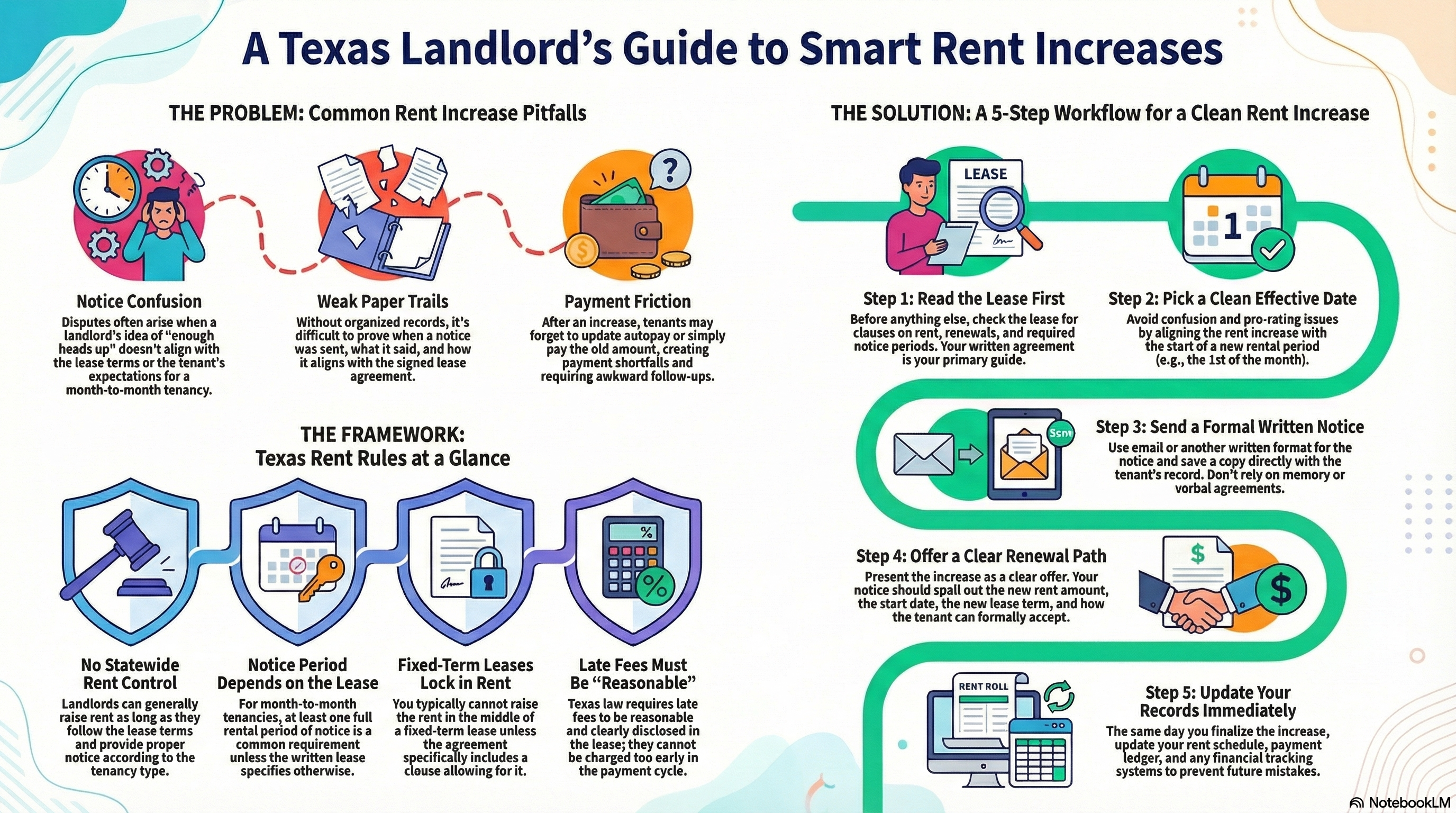
Notice confusion. Someone thinks they gave “enough heads up,” the tenant disagrees, and now you’re scrolling through sent emails at a red light (don’t). If the tenant’s month-to-month, timing matters, and your lease language matters even more.
Paper trails that don’t hold up. You can be right and still lose time because you can’t quickly prove what was sent, when it was sent, and what the lease says.
Payment friction after the increase. Tenants miss the new amount, pay the old amount, or forget to update autopay. Suddenly it’s the 4th of the month, and your coffee smells burnt because you’ve reheated it twice.
RentMouse helps reduce those headaches by keeping the lease, the notice, and the rent schedule connected so you’re not managing a rent change across five tools and a sticky note.
What Changes for Landlords
Texas doesn’t have statewide rent control, so rent increases are generally allowed, but the practical rules come from your lease terms and Texas landlord-tenant law basics.
Here are the real-world changes landlords are making in 2026, and what to watch:
More month-to-month conversions. Some owners prefer flexibility. In Texas, month-to-month tenancies often require at least one full rental period of notice to change terms like rent, unless the lease says otherwise (30 days is the common benchmark people use, but your written agreement controls). Put the notice in writing and keep it organized.
Tighter renewal timelines. Landlords are starting renewal conversations earlier to avoid vacancy gaps. That means you need a repeatable workflow for drafting terms, sending the offer, tracking acceptance, and updating the rent amount.
Higher sensitivity to fees and “extras.” Late fees, pet rent, and utility billing can become the real argument, not the base rent. Texas law has specific standards around late fees being reasonable and not charged too early, and the lease needs to be clear [2].
Three RentMouse fixes that map to the pain points:
Rent change paperwork stays attached to the lease record. Use a single place for the lease, amendments, and renewal documents via lease management (so you’re not hunting PDFs named “Lease_FINAL_final2.pdf”).
Rent amount updates without guesswork. When the rent changes, you want the ledger to reflect it immediately and consistently. RentMouse supports cleaner payment workflows through rent collection, reducing “I paid what I always pay” moments.
If the increase triggers move-out, turnover needs to be fast. A rent hike sometimes ends with a key drop and an empty unit that smells faintly like old takeout. Maintenance tracking helps you turn the unit quickly with maintenance so vacancy doesn’t eat the gain.
What to Do Next
Use this simple Texas rent increase workflow to keep things calm and provable.
Read the lease first, not the internet. Check the rent clause, renewal terms, and notice language. If it’s silent, treat the tenancy type (fixed-term vs month-to-month) as your guide.
Pick a clean effective date. Landlords get into trouble by choosing awkward mid-cycle dates. Align the increase with the start of a rental period when possible.
Send a written notice and save it. Email is common, but don’t rely on “I’m pretty sure it sent.” Save a copy with the tenant record. RentMouse can keep notices and supporting files together using document storage.
Offer a renewal path, not just a price. Many tenants can handle a modest increase if the process feels respectful and clear. Spell out: new rent, start date, lease term, and how to accept.
Update your rent schedule and ledger the same day. This is where mistakes multiply. If you track income and changes in one place, you’ll thank yourself at tax time (future you is tired). RentMouse supports cleaner bookkeeping habits with expense tracking.
Near the finish line, repeat the primary keyword: A consistent Texas rent increase process is less about legal trivia and more about timing, documentation, and payments that match the new amount.
If you want a lighter admin load, RentMouse is built for landlords who just want the basics to run smoothly: rent collection, leases, maintenance, and records in one place.
Frequently Asked Questions
Q: Is there rent control in Texas? A: Texas does not have statewide rent control. In most cases, landlords can raise rent if they follow the lease terms and provide proper notice for the tenancy type [2]. Some subsidized or regulated housing programs can have separate rules.
Q: How much notice do I need for a Texas rent increase? A: It depends on the lease and whether the tenant is fixed-term or month-to-month. Many month-to-month situations use at least one full rental period of notice. Put it in writing and align it with the rent due cycle when possible.
Q: Can I raise rent during a fixed-term lease in Texas? A: Typically, no, not unless the lease allows it. Most fixed-term leases lock the rent until renewal. Check the rent clause and any escalation language.
Q: What if a tenant keeps paying the old rent after the increase? A: Communicate quickly and in writing. Confirm the new amount, the effective date, and whether partial payment will be accepted. Keeping the lease, notice, and payment records together reduces back-and-forth.
Q: Are late fees allowed in Texas? A: Yes, but Texas has rules around late fees being reasonable and not charged too early, and the lease should clearly disclose them [2].
Sources
[1] Zillow Observed Rent Index (ZORI) and rent trend data. https://www.zillow.com/research/data/
[2] Texas Property Code, landlord-tenant provisions (including late fee standards). https://statutes.capitol.texas.gov/?link=PR
[3] Texas Attorney General, Landlord and Tenant rights and responsibilities overview. https://www.texasattorneygeneral.gov/consumer-protection/home-real-estate-and-travel/renters-rights
[4] U.S. Department of Housing and Urban Development (HUD), Fair Housing Act overview. https://www.hud.gov/program_offices/fair_housing_equal_opp/fair_housing_act_overview
Test Your Knowledge! 🎯
Question 1 of 5


